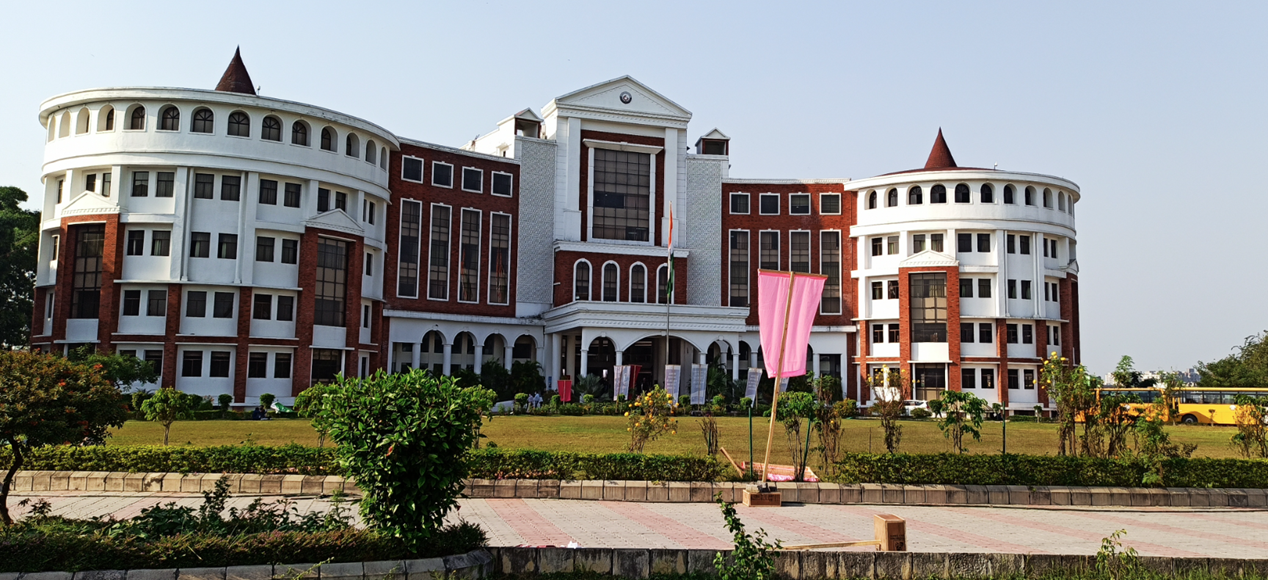
The degree certificate looks much the same wherever it is issued. What differs is everything behind it: the instruments you trained on, the manufacturing unit where you completed industrial training, and whether recruiters treat the institution's name as a signal worth acting on.
Uttarakhand has more than thirty institutions offering a bachelor of pharmacy course, the large majority of them private, and the quality range across them is wide. This guide sets out what to examine before choosing among pharmacy colleges in Uttarakhand, how admission works, and where the qualification leads.
Why Uttarakhand Is a Serious Choice for Pharmacy Study
The state holds an advantage most others cannot match: the pharmaceutical industry is physically present, at scale, close to the main campuses.
Dehradun and Haridwar have developed into significant pharmaceutical manufacturing hubs, with more than two hundred pharma establishments operating across the integrated industrial estates developed by the state's industrial infrastructure corporation. The principal clusters sit at Selaqui near Dehradun — the estate known as Pharma City — at Ranipur in Haridwar, and across Pantnagar and Rudrapur in Udham Singh Nagar. A second phase of Pharma City has been proposed at Charba, Selaqui, which indicates a base still expanding rather than plateauing.
For a pharmacy student, this proximity is not an abstraction. It determines how readily industrial training can be arranged, whether internships are within commuting distance, and how many recruiters treat local institutes as a routine hiring source.
Bachelor of Pharmacy Course: What You Are Signing Up For
| Particular | Detail |
|---|---|
| Degree | Bachelor of Pharmacy (B.Pharm) |
| Duration | 4 years, across 8 semesters |
| Regulator | Pharmacy Council of India |
| Eligibility | 10+2 with Physics, Chemistry and either Biology or Mathematics |
| Lateral entry | D.Pharm holders, typically with 60 percent aggregate |
| Core subjects | Pharmaceutics, pharmacology, pharmaceutical chemistry, pharmacognosy, pharmaceutical analysis |
The bachelor of pharmacy course is laboratory-intensive from the first semester onward. Later years introduce industrial pharmacy, quality assurance, pharmacovigilance and regulatory affairs, and every approved programme includes practical training in a manufacturing unit or hospital pharmacy. That training placement is where institutional quality becomes most visible.
Six Things to Check Before You Choose
PCI Approval Comes First
This criterion allows no flexibility. A degree from an institution lacking valid Pharmacy Council of India approval cannot be used to register as a pharmacist, which closes off community practice, hospital pharmacy and most government roles.
Verify approval status on the Council's own portal rather than the college prospectus, and check state university affiliation alongside it.
Laboratory Instrumentation, Not Laboratory Count
"Well-equipped labs" means nothing on its own. Ask what is actually installed: HPLC systems, UV spectrophotometers, dissolution apparatus and the equipment required for pharmaceutical analysis coursework.
Then ask the more revealing question — how many students share each instrument, and whether laboratories are accessible outside timetabled hours. A single instrument serving sixty students is a demonstration, not training.
Faculty Depth
Look at the proportion of full-time faculty holding M.Pharm and doctoral qualifications, and how many have worked in industry, particularly in quality control, quality assurance or regulatory functions.
The Council prescribes staffing norms for approved programmes. Asking whether an institute meets them, and how many sanctioned positions are currently vacant, tends to produce a more honest answer than asking about faculty quality in general terms.
Industrial Training and Placement Links
The question that matters is whether industrial training is arranged by the institute or left to students to source themselves. In a state with this concentration of manufacturing, an institute unable to place its own students in training has a relationship problem, not a geography problem.
On placements, ask for three years of batch-specific data, median rather than highest package, and the categories of recruiter involved — formulation units, quality control laboratories, hospital pharmacies and contract research organisations.
Fee Structure Weighed Against Outcome
Fees across pharmacy colleges in Uttarakhand span a very wide range. Compare the total four-year cost, including hostel, examination and laboratory charges, rather than the headline annual tuition figure.
Set that total against the median starting salary the institute reports, and ask about merit scholarships and category waivers, which can change the real number considerably.
Registration and Higher Study Support
After graduation you must register with the State Pharmacy Council in order to practise. Ask whether the institute assists with that process. Check as well whether an M.Pharm programme runs on the same campus, and what support exists for students targeting postgraduate entrance examinations.
Admission Routes to Pharmacy Colleges in Uttarakhand
| Route | Detail |
|---|---|
| UKSEE | State entrance exam conducted by Uttarakhand Technical University for participating institutes; domicile conditions apply |
| CUET UG | Accepted by participating central and private universities |
| University-level tests | Several private and deemed universities conduct their own entrance examinations |
| 10+2 merit | Many private institutes admit directly on qualifying marks |
| Lateral entry | D.Pharm holders entering the second year directly |
The sequence is consistent across routes: register within the notification window, appear for the examination, register for counselling once results are declared, fill and lock your choices, attend seat allotment, then complete document verification and fee payment.
Private institute applications generally run in parallel with state counselling and often close earlier. Waiting for counselling results before applying privately is how candidates end up with fewer options than they had earned on merit.
Where a Pharmacy Career Leads
Given the state's industrial base, manufacturing roles are the most visible destination — quality assurance, quality control, production and formulation development within pharmaceutical units.
Beyond that, the degree supports:
- Regulatory affairs and pharmacovigilance, functions that have grown as compliance requirements tightened
- Hospital and community pharmacy, following registration as a pharmacist
- Clinical research, in trial coordination and safety monitoring roles
- Medical writing and pharmaceutical marketing, for those inclined towards technical communication or commercial work
- Government positions such as drug inspector and government hospital pharmacist, subject to the relevant recruitment examinations
Higher study widens the field further. An M.Pharm allows specialisation, Pharm D supports clinical practice, and an MBA in pharmaceutical management leads towards commercial leadership within the sector.
FAQs: Pharmacy Colleges in Uttarakhand
1. How many pharmacy colleges are there in Uttarakhand?
More than thirty institutions offer B.Pharm programmes, with private institutes forming the large majority.
2. Is UKSEE mandatory for B.Pharm admission in Uttarakhand?
No. It governs state-quota seats at participating institutes. Many private universities admit through their own entrance tests or on 10+2 merit.
3. Can students from other states apply?
Yes, through private and university-level admission routes. UKSEE carries domicile conditions, so verify these before applying.
4. Can Mathematics students take a bachelor of pharmacy course?
Yes. Physics and Chemistry are compulsory, and either Biology or Mathematics satisfies the third subject requirement.
5. Does a B.Pharm degree allow me to open a medical store?
Yes, after registering as a pharmacist with the State Pharmacy Council and obtaining the required drug licence.
Making the Decision
Verify approval before anything else, then visit the campuses you are seriously considering. Ask to see the laboratories rather than the reception area, ask final-year students where they completed industrial training and how it was arranged, and ask the placement office for three years of data rather than a single headline figure. The institutions worth choosing answer all three without hesitation.
