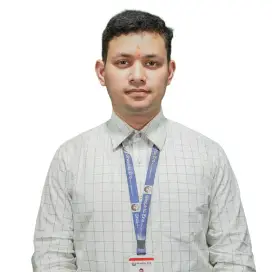
Daksh Rawat | Faculty Computer Science and Engineering

Mr. Daksh Rawat
Teaching Associate

EDUCATION

  • B.Tech (CSE), Graphic Era Hill University, Dehradun (2025)
  • M.Tech (CSE), Graphic Era (Deemed to be) University, Dehradun (Ongoing)

RESEARCH AREA

  • Machine Learning
  • Artificial Intelligence
  • Deep Learning

ACADEMIC, RESEARCH AND INDUSTRIAL EXPERIENCE (in years)

  • Research Experience- 2.5 years

AWARDS/HONORS/ACHIEVEMENTS

  • Young Scholar Award, Graphic Era Hill University, 2024
  • Young Innovator Award, Graphic Era Hill University, 2024
  • Young Scientist Award, Graphic Era Hill University, 2025

Daksh Rawat is currently serving as a Teaching Associate in the Department of Computer Science and Engineering at Graphic Era Hill University, Dehradun. He has been recognized multiple times for his contributions to research, innovation, and academic excellence, including receiving the Young Scientist Award.

His areas of work include computer networks, artificial intelligence, deep learning, machine learning, computer vision, and predictive analytics. His teaching approach emphasizes combining conceptual clarity with practical applications, enabling students to build both strong academic foundations and real-world problem-solving skills.

In addition to teaching, he actively engages in research projects involving AI-driven analytics, image processing, and intelligent systems, with the aim of developing impactful solutions that bridge the gap between technology and society. He has authored more than 35 conference articles and a book chapter and is actively involved in ongoing research and patent writing.

ORCID ID: 0009-0007-9046-6988
Scopus ID: 59250755000
Vidwan ID: 641890
Google Scholar ID: https://scholar.google.com/citations?hl=en&user=kPH8eqgAAAAJ

LIST OF RESEARCH PUBLICATION (Follow APA Style of referencing for writing)

  • Khetarpal, D., Khetarpal, I., Rawat, D., Narang, H., Vats, S., & Sharma, V. (2024, June). Trash Detection: Advanced Classification of Waste Materials Using ML Techniques. In 2024 OPJU International Technology Conference (OTCON) on Smart Computing for Innovation and Advancement in Industry 4.0 (pp. 1-6). IEEE.
  • Rawat, D., Negi, D., Maurya, S., Rawat, P., Vats, S., & Sharma, V. (2024, September). A novel approach for Identifying Age-Related Conditions. In 2024 Asian Conference on Intelligent Technologies (ACOIT) (pp. 1-5). IEEE.
  • Rawat, D., Khetarpal, I., Khetarpal, D., Upadhyay, A., Bagla, P., & Aeri, M. (2024, November). Enhancing Customer Retention: A Comprehensive Analysis of Churn Prediction with KNN. In 2024 4th International Conference on Technological Advancements in Computational Sciences (ICTACS) (pp. 1735-1739). IEEE.
  • Rawat, D., Mavi, P. K., Saini, A. K., Verma, D., Das, P., & Manwal, M. (2024, September). Securing IoT Face Recognition: Using Steganography Integration for Enhanced Security. In 2024 International Conference on Communication, Computing and Energy Efficient Technologies (I3CEET) (pp. 323-327). IEEE.
  • Rawat, D., Khetarpal, D., Khetarpal, I., Vats, S., & Sharma, V. (2025, May). Wide-Angle Threat Detection: Fisheye Imaging and Machine Learning for Enhanced Drone and Bird Surveillance. In 2025 International Conference on Networks and Cryptology (NETCRYPT) (pp. 1945-1950). IEEE.
  • Vats, S., Sharma, V., Singh, P., Thakur, S., & Rawat, D. (2026). How Do LLMs Work?: A Deep Dive Into Transformer Models. In Digital Watermarking in Cloud Environments For Copyright Protection (pp. 85-106). IGI Global Scientific Publishing

Admissions Open 2026

The application process at Graphic Era is strictly based on the Merit of the qualifying examination with the entire Admission Process available for completion online

Admissions Open 2026

The application process at Graphic Era is strictly based on the Merit of the qualifying examination with the entire Admission Process available for completion online